Pregnancy & birth
Ectopic Pregnancy: Symptoms, Diagnosis and Treatment Options
8 min read
What is an ectopic pregnancy, what are its symptoms, how is it diagnosed and what treatment options are available? A gynecologist's guide.
An ectopic pregnancy is a pregnancy in which the fertilized egg implants outside the uterine cavity, most often in a fallopian tube. A missed period, spotting between periods and pain on one side of the lower abdomen are the most common symptoms. Diagnosis is made with serial beta-hCG blood tests and a transvaginal ultrasound. When it is caught early, medication or laparoscopic surgery can be considered.
What Is an Ectopic Pregnancy?
In a normal pregnancy, the egg is fertilized in the fallopian tube and, within a few days, travels to the uterine cavity and implants in the lining of the uterus. In an ectopic pregnancy, the fertilized egg implants somewhere else before reaching the uterine cavity. Most ectopic pregnancies occur in the fallopian tubes. Less often, they implant in the ovary, the cervix, a previous cesarean scar or the abdominal cavity.
These sites outside the uterus cannot support a developing pregnancy, so an ectopic pregnancy cannot continue normally and needs treatment. It occurs in about 1 to 2 percent of pregnancies.
Risk Factors
An ectopic pregnancy can occur in women with no risk factors. However, it is more likely if you have:
- Had an ectopic pregnancy before
- Had a pelvic infection that may have damaged the tubes
- Had surgery on the tubes, including tubal ligation or tubal reversal
- Endometriosis
- Conceived through assisted reproduction such as IVF
- A history of smoking
- Become pregnant with an IUD in place (an IUD greatly reduces the chance of pregnancy, but if pregnancy does occur, it needs to be checked for ectopic pregnancy)
Symptoms of Ectopic Pregnancy
Symptoms usually appear around weeks 6–8 of pregnancy. Some women have no symptoms at first.
Early symptoms
- A missed period and a positive pregnancy test
- Spotting, or bleeding that differs from a normal period, usually lighter and darker
- Pain in the lower abdomen, usually on one side
- Pregnancy-related nausea and breast tenderness
Symptoms that need emergency care
- Severe or worsening abdominal or pelvic pain
- Dizziness, feeling faint or fainting
- Shoulder-tip pain (which may signal internal bleeding)
- A feeling of pressure in the rectum
- Looking pale, a fast heartbeat
If you have any of these symptoms, go to the nearest emergency department without delay.
How Is It Diagnosed?
Blood test: beta-hCG
The level of the pregnancy hormone beta-hCG is measured in the blood. In a normally developing early pregnancy, this level rises at a certain rate. In an ectopic pregnancy, it usually rises more slowly than expected or plateaus. That is why repeat measurements 48 hours apart are assessed rather than a single result.
Transvaginal ultrasound
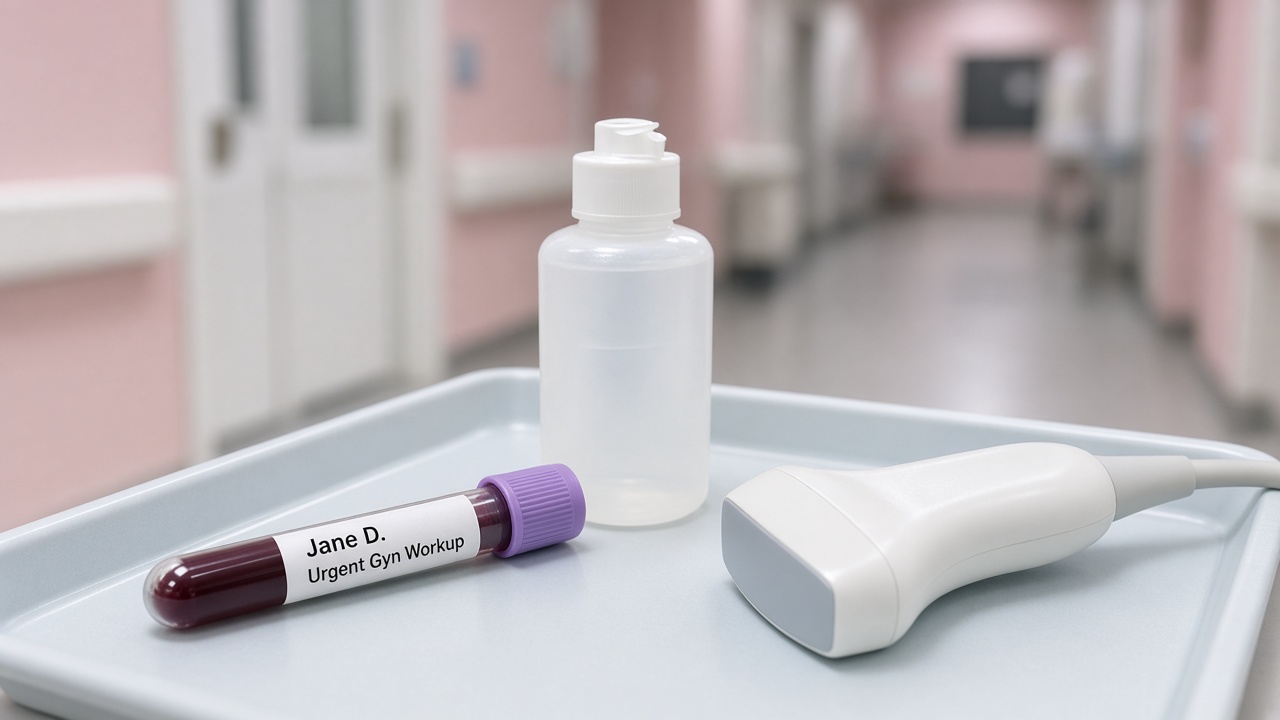
Once beta-hCG reaches a certain level, a gestational sac inside the uterus should be visible on transvaginal ultrasound. An empty uterus, a mass near the tube or fluid in the abdomen are important findings that point to an ectopic pregnancy.
Pregnancy of unknown location
Early on, the pregnancy test may be positive while the location of the pregnancy cannot yet be seen on ultrasound. This is called a "pregnancy of unknown location." During this time, follow-up beta-hCG tests and ultrasounds clarify whether the pregnancy is inside or outside the uterus, or whether it has ended on its own.
Who Is It For? Treatment Options
The choice of treatment depends on your overall condition, beta-hCG level, ultrasound findings, whether there is internal bleeding and your plans for future pregnancy.
Expectant management
In selected cases where beta-hCG is low and falling on its own and there are no symptoms, the pregnancy can be closely monitored as it resolves on its own. This approach requires regular check-ups.
Medication (methotrexate)
For women who are stable, have no signs of internal bleeding and have a beta-hCG level below a certain threshold, a medication called methotrexate, which stops the pregnancy tissue from growing, can be given as an injection into a muscle.
- Beta-hCG is measured on set days after treatment to monitor the medication's effect.
- In some cases, a second dose may be needed.
- During treatment, avoid alcohol, vitamins containing folic acid, certain pain relievers and prolonged sun exposure.
- Follow-up continues until beta-hCG is negative.
Surgery
Surgery is preferred when there are signs of internal bleeding, or when medication is not suitable or has not worked. It is usually done laparoscopically (keyhole surgery):
- Salpingostomy: A small incision is made in the tube, the pregnancy tissue is removed and the tube is preserved.
- Salpingectomy: The affected tube is removed. This is preferred if the tube is badly damaged or the bleeding cannot be controlled.
Which approach is used depends on the condition of the tube during surgery and your plans for future pregnancy.
Recovery After Treatment
After medication
- You may have lower abdominal pain and vaginal bleeding for a few days.
- You need to keep coming to your appointments until beta-hCG follow-up is complete.
- Your doctor may advise avoiding sex and strenuous exercise for a while.
After laparoscopic surgery
- You usually go home within a day.
- You can return to daily activities within a few days and to strenuous activities usually after a few weeks.
- If the tube was preserved, beta-hCG is followed to confirm that all pregnancy tissue has been removed.
Emotional recovery
Besides the physical recovery, an ectopic pregnancy can be emotionally difficult. Feelings of loss, sadness and worry about the next pregnancy are natural. Support from your partner, family and, if needed, a mental health professional helps with healing.
Pregnancy After an Ectopic Pregnancy
Most women who have had an ectopic pregnancy can go on to have a healthy pregnancy. Natural conception is possible even with only one tube. After methotrexate, waiting at least three months before trying again is usually recommended. After surgery, your doctor will advise you on how long to wait. In your next pregnancy, an early ultrasound is recommended to confirm that the pregnancy is inside the uterus.
The Importance of an Early Pregnancy Check
The first visit after a positive pregnancy test is important for confirming where the pregnancy is located. An early visit and ultrasound are especially recommended if you have had an ectopic pregnancy before, have had surgery on your tubes or conceived through IVF. This way, a possible ectopic pregnancy can be detected before symptoms appear or while they are still mild, and more treatment options can be considered.
Conditions That Can Be Mistaken for Ectopic Pregnancy
Bleeding and pelvic pain in early pregnancy can have other causes:
- Early pregnancy loss (miscarriage): The end of a pregnancy inside the uterus; it can cause bleeding and cramping pain.
- Blighted ovum: There is a gestational sac in the uterus, but no embryo develops.
- Ovarian cysts: Cysts such as a corpus luteum cyst in pregnancy can cause pelvic pain.
- Non-gynecologic causes such as urinary tract infection and appendicitis can cause similar symptoms.
That is why bleeding and pain in early pregnancy should always be evaluated with an examination and ultrasound.
What Is Considered When Choosing Treatment
When planning treatment, your personal preferences matter alongside your overall condition and medical findings. Medication requires you to be able to come in regularly for blood tests. Surgery resolves the problem more quickly but requires anesthesia and an operation. If you are planning a future pregnancy, the condition of your tubes and the options for preserving them are discussed in detail. All options are explained along with their possible benefits and limitations, and the decision is made together.
Information to Share at Your Visit
When you are seen for early pregnancy assessment, it is important to share the date of your last period, when you took the pregnancy test, any previous beta-hCG results, when the bleeding and pain began, any previous ectopic pregnancy or tubal surgery, IUD use and any history of IVF treatment. This information helps make the assessment faster and more accurate.
Frequently Asked Questions
Does a regular pregnancy test show positive with an ectopic pregnancy?
Yes. Because the pregnancy hormone is still produced in an ectopic pregnancy, home pregnancy tests are usually positive. An ultrasound is needed to find out where the pregnancy is.
Can an ectopic pregnancy resolve on its own?
Some early ectopic pregnancies do end on their own. This can only be confirmed with beta-hCG and ultrasound follow-up.
Can an ectopic pregnancy be moved into the uterus?
No. A pregnancy that has implanted outside the uterus cannot be moved into the uterus.
Can I have another ectopic pregnancy?
A previous ectopic pregnancy increases the chance of it happening again. That is why an early ultrasound is recommended in future pregnancies.
How long should I wait to get pregnant after methotrexate?
Waiting at least three months is usually recommended. This time allows the medication to leave the body and folic acid levels to return to normal.
Can I get pregnant with one tube?
Yes. If the remaining tube and the ovaries are healthy, natural conception is possible.
Related Articles
Medical content: Op. Dr. Miray Sekkin Eser
This content is for general information only; diagnosis and treatment require an examination.
This page is general information. Your own plan is set after examination.