
Gynecology
Dermoid Cyst: Symptoms, Diagnosis and Treatment
8 min read
What is an ovarian dermoid cyst (mature cystic teratoma), how is it diagnosed, when is surgery recommended and what is recovery like after laparoscopic treatment?
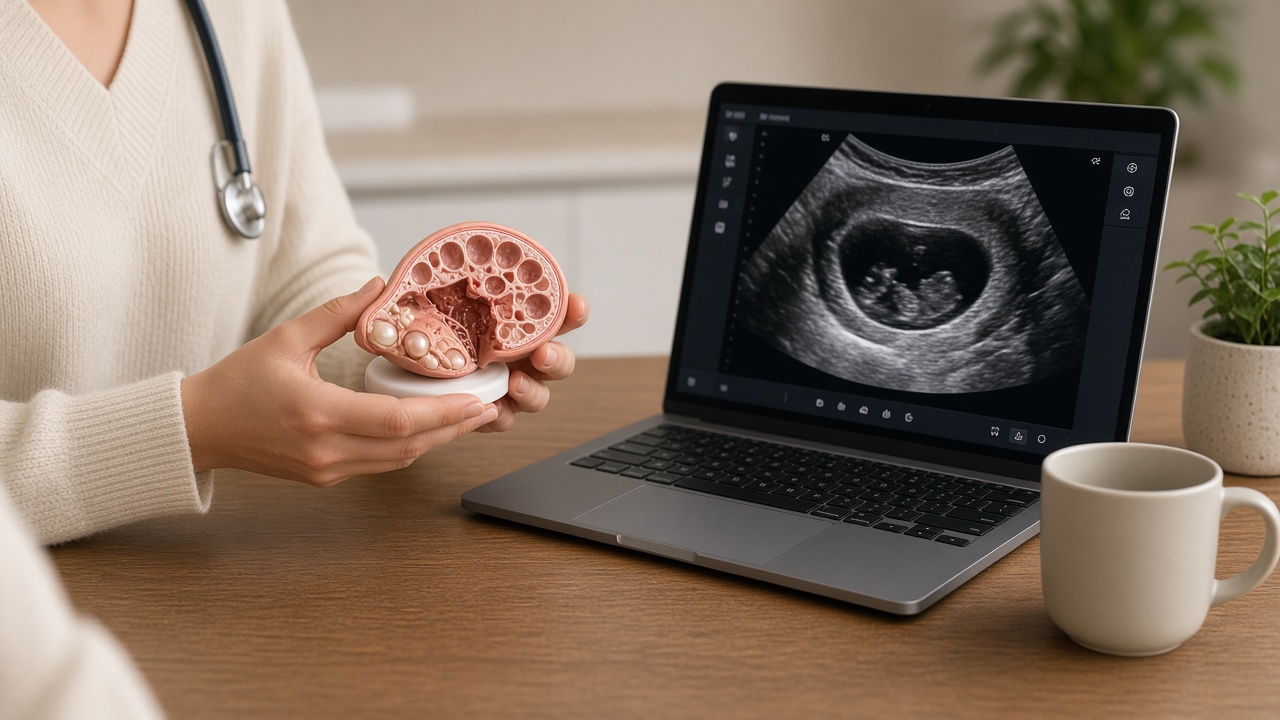
A dermoid cyst (mature cystic teratoma) is a benign cyst that develops in the ovary and can contain tissues such as fat, hair, skin or teeth. It usually occurs during the reproductive years and is often found by chance on a routine ultrasound. It does not go away on its own. Depending on its size and symptoms, either monitoring or ovary-sparing laparoscopic surgery is planned.
What Is a Dermoid Cyst?
Dermoid cysts develop from germ cells, the precursors of egg cells. These cells can develop into many different types of body tissue, which is why a dermoid cyst may contain oily fluid, hair, skin, sweat glands, bone or teeth. This can sound surprising at first, but the vast majority of dermoid cysts are benign.
It is one of the more common types of ovarian cyst. It usually affects one ovary, though less often both ovaries are involved. It tends to grow slowly and, unlike functional cysts related to the menstrual cycle, does not disappear on its own.
What Causes a Dermoid Cyst?
Dermoid cysts are thought to arise from abnormal development of germ cells and are generally considered to be present from early life. They are not linked to diet, lifestyle, sexual activity or contraceptive methods, and there is no known way to prevent them.
Symptoms
Many dermoid cysts cause no symptoms. When they do, they may cause:
- A dull ache, fullness or pressure in the pelvis or lower abdomen
- Abdominal bloating
- Frequent urination or constipation if the cyst is large
- Pain during sex
When to seek emergency care
Because of their weight, dermoid cysts can cause the ovary to twist around its own axis (ovarian torsion), which affects the ovary's blood supply. If you have sudden, severe pain on one side of your pelvis with nausea and vomiting, go to the emergency department without delay. With prompt treatment, the ovary can often be saved. Rupture of the cyst is rare.
How Is It Diagnosed?
Ultrasound
Transvaginal ultrasound is the first-choice method for diagnosing a dermoid cyst. The fat, hair and calcifications inside the cyst create a characteristic appearance, so the diagnosis can often be made with ultrasound alone.
MRI and other imaging
MRI may be used when the ultrasound findings are unclear or to plan surgery. It is helpful for identifying the fat tissue inside the cyst.
Blood tests
Certain tumor markers may be ordered when needed. These tests do not make a diagnosis on their own; they are interpreted together with the ultrasound findings.
Who Needs Treatment? Treatment Options
Monitoring
For small dermoid cysts that cause no symptoms and have a typical appearance, especially in premenopausal women, regular ultrasound monitoring can be an option. The size and appearance of the cyst are tracked over time.
Surgery
Surgery is recommended for:
- Cysts that cause symptoms
- Cysts that grow during monitoring
- Cysts above a certain size (the threshold is assessed individually)
- Cysts with an atypical ultrasound appearance or that need further evaluation
- Cysts that have caused torsion or are considered at high risk of it
- Cysts that are best treated before a planned pregnancy
Medication does not shrink or eliminate dermoid cysts.
How Surgery Works
Laparoscopic cystectomy
Laparoscopic (keyhole) surgery is the usual approach. Under general anesthesia, a camera and fine instruments are inserted through a few small incisions in the abdominal wall. The cyst is carefully separated from the healthy ovarian tissue and removed. The aim is to preserve as much ovarian tissue as possible, which is especially important for protecting fertility.
To prevent the cyst contents from spilling into the abdominal cavity, the cyst is removed inside a special bag. The removed tissue is sent for pathology.
Open surgery
Open surgery may be preferred for very large cysts or when additional surgery is needed.
Removing the ovary
After menopause, or when the ovarian tissue cannot be preserved, removal of the ovary may be considered after discussion with your doctor.
Recovery
Recovery after laparoscopic surgery is usually quick:
- Most women go home the same day or the next day.
- In the first few days, you may have mild pain at the incision sites and shoulder pain from the gas used to inflate the abdomen; this passes within a few days.
- You can return to light daily activities within a few days and to desk work usually after about a week.
- Waiting about four weeks before heavy lifting and strenuous exercise is generally recommended.
- Your doctor will advise when you can resume sex, depending on the extent of the surgery.
- Keep the incision sites clean and dry.
- The pathology result usually comes back within one to two weeks and is reviewed at your follow-up visit.
See a doctor if you develop fever, redness or discharge at an incision site, or worsening abdominal pain.
Dermoid Cysts and Fertility
A dermoid cyst on its own usually does not prevent pregnancy. Most women treated with ovary-sparing surgery can plan a pregnancy afterward. Dermoid cysts found during pregnancy are usually monitored; if torsion or marked growth occurs, surgery is considered with your week of pregnancy in mind. Because a new dermoid cyst can develop in the other ovary or the same one after treatment, regular check-ups are recommended.
How Dermoid Cysts Differ From Other Ovarian Cysts
Ovarian cysts have different origins, and each needs a different approach:
- Functional cysts: Form as part of the menstrual cycle and usually disappear on their own within a few cycles. Monitoring is usually enough.
- Endometrioma ("chocolate cyst"): Linked to endometriosis; contains old blood and can cause painful periods and pelvic pain.
- Serous and mucinous cysts: Fluid-filled cysts that develop from the surface of the ovary.
- Dermoid cyst: Develops from germ cells, may contain tissues such as fat and hair, and does not go away on its own.
The ultrasound appearance helps tell these cysts apart, and the type of cyst directly affects the decision between monitoring and treatment.
Preparing for Surgery
When surgery is planned:
- Blood tests and, if needed, imaging are completed.
- An anesthesia assessment is done.
- Your medications, especially blood thinners, are reviewed.
- You will be asked not to eat or drink after a certain time the night before surgery.
- The extent of the surgery, possible risks, the approach to preserving the ovary and recovery are all discussed in detail.
Things to Watch for During Monitoring
If your dermoid cyst is being monitored, regular check-ups are important. Your doctor usually sets the interval based on the size of the cyst. If you develop signs of torsion such as sudden severe pelvic pain, nausea and vomiting, go to the emergency department without waiting for your next appointment. Daily activities usually do not need to be restricted; check with your doctor if you have symptoms.
Information to Share at Your Visit
When a dermoid cyst is being evaluated, it helps to share the date of your last period, whether you have pain and what it is like, previous ultrasound results, past gynecologic surgery, pregnancy plans and any family history of ovarian disease. Bringing previous imaging reports helps show how the cyst's size has changed over time. Based on this information, monitoring or treatment is planned for you individually, your questions are answered and the decision is made together.
Because the incisions in laparoscopic cystectomy are small, the scars fade over time. Care of the incision sites and when you can shower are explained in detail when you are discharged.
Frequently Asked Questions
Does a dermoid cyst go away on its own?
No. Unlike functional cysts, dermoid cysts do not disappear on their own. Small cysts without symptoms can be monitored.
Is a dermoid cyst cancer?
The vast majority of dermoid cysts are benign. Malignant change is very rare and has mostly been reported at older ages and in large cysts.
Can a dermoid cyst be treated with medication?
No. Birth control pills and other medications do not shrink a dermoid cyst. When treatment is needed, surgery is used.
Does dermoid cyst surgery damage the ovary?
In a cystectomy, the cyst is separated from the healthy ovarian tissue and removed, preserving the ovary as much as possible. Before surgery, you will be given personalized information about your ovarian reserve.
Can a dermoid cyst come back?
When the cyst is removed completely, the chance of the same cyst returning is low. However, a new dermoid cyst can develop in the same or the other ovary.
Is a dermoid cyst a problem in pregnancy?
Most dermoid cysts cause no problems in pregnancy and are monitored. If there are signs such as torsion, an evaluation is done, and surgery can be planned at a suitable stage of pregnancy if needed.
How long does dermoid cyst surgery take?
It depends on the size and location of the cyst, but a laparoscopic cystectomy usually takes one to two hours.
Related Articles
Medical content: Op. Dr. Miray Sekkin Eser
This content is for general information only; diagnosis and treatment require an examination.
This page is general information. Your own plan is set after examination.