
Gynecology
Polycystic Ovary Syndrome (PCOS) Treatment in Ankara
11 min read
PCOS treatment combines diet, exercise, insulin-sensitizing medication and hormonal therapy tailored to each woman. Learn how PCOS is diagnosed and treated, including fertility options.
Polycystic ovary syndrome (PCOS) treatment is a holistic management process tailored to a woman's stage of life. It combines dietary discipline, an active lifestyle, medication that improves insulin sensitivity and hormone-balancing treatments. The aim is not only to relieve current symptoms but also to improve metabolism and protect reproductive health and overall balance in the long term. Restoring hormonal balance with evidence-based methods helps reduce long-term health risks and improve quality of life. This process, which helps reset the body's biological rhythm, is a personal health roadmap for each woman.
What Is Polycystic Ovary Syndrome (PCOS)?
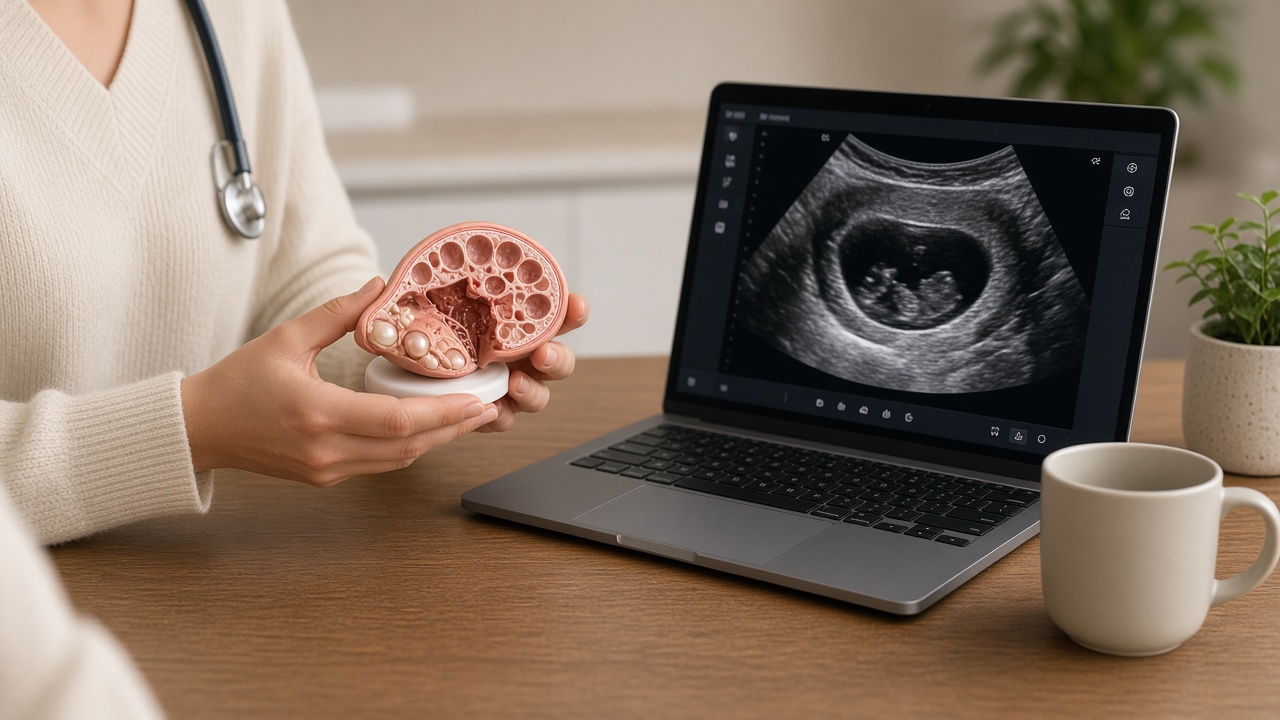
Our body works like a finely tuned clock, and hormones drive its gears. PCOS is essentially a disruption in the rhythm of these gears. In a normal, healthy reproductive cycle, a woman's body carefully selects one egg each month, grows it inside a small sac, and when the time comes the sac ruptures and ovulation takes place. But when communication between hormones breaks down, this system falters. The selected egg sacs, called follicles, can't mature because they don't receive enough signal. Their growth stops halfway, and because they can't rupture, they line up around the outer edge of the ovary like a small string of pearls. This is the well-known appearance seen on ultrasound.
The effects don't stay limited to the ovaries. Because ovulation doesn't happen, the body's normal cycle is disrupted, and periods are delayed or stop altogether. But the bigger storm happens behind closed doors, in the metabolic system. The way cells use energy changes, blood sugar balance is disturbed and the body becomes prone to storing fat. What looks like a purely gynecologic issue is actually a broad picture involving the whole endocrine system, the pancreas, the liver and even the skin. This breakdown in communication at the cellular level can lower the body's capacity to use energy and leave a woman feeling constantly tired and drained. That's why seeing the body as a whole, not just its reproductive organs, is essential for tackling the problem at its root.
What Causes PCOS?
Why PCOS develops is still one of the questions medicine is working hardest on. There is no single culprit or cause; it arises from a combination of genetic inheritance and environmental factors linked to modern life. If your mother, aunt or sister has had similar complaints, insulin resistance or diabetes, you are more likely to carry a genetic predisposition. Alongside genetics, however, the key mechanism to focus on is insulin resistance.
We can think of the body's cells as small locked rooms. Sugar from the food we eat has to enter these rooms to be turned into energy, and the hormone insulin is the key that opens their doors. In insulin resistance, the locks become rusty or faulty. To open the doors, the pancreas keeps producing more keys, pumping more and more insulin into the blood. This excess insulin eventually reaches the ovaries and wrongly signals them to produce much more male hormone, testosterone, than they normally should. These raised male hormones then stop ovulation and start the vicious cycle of the syndrome. It's one of the clearest examples of how a fault in one part of the body can disrupt another system.
How Is PCOS Diagnosed?
One of the most common misconceptions is that PCOS can be diagnosed simply by seeing a few small follicles in the ovaries on ultrasound. Similar images can be seen in a significant number of healthy women who have no complaints and regular periods. That's why internationally accepted diagnostic criteria with strict rules are used for an accurate diagnosis. At least two of three main features must be clearly present. Other conditions that can mimic it, such as adrenal gland disorders or thyroid problems, also need to be ruled out with blood tests.
The first criterion is disrupted ovulation: having very few periods a year or going months without a period unless medication is used. The second is raised male hormone levels in the blood, or physical signs of them on the body. The third is an ultrasound, done with modern high-resolution equipment, clearly showing increased ovarian volume or many small follicles together. Laboratory tests are also very valuable: certain hormone tests that reflect ovarian reserve and values showing how the body processes sugar are reviewed carefully.
The most important physical signs considered in clinical assessment are:
- Delayed periods
- Missed periods
- Rapid weight gain
- Difficulty losing weight
- Increased body hair
- Patchy hair loss
- Darkening of the skin on the neck
Why Do Diet and Lifestyle Come First in PCOS Treatment?
After diagnosis, the first prescription is usually not boxes of medication but a real change in a woman's kitchen and daily routine. Whatever her weight, adjusting lifestyle is the cornerstone of treatment. Most women with PCOS gain weight, especially stubborn fat around the waist. This fat tissue is not an innocent store; it behaves like an active organ that produces its own hormones and makes insulin resistance worse. The good news is that losing even a small part of body weight, around five percent, can improve insulin sensitivity and help hormones move back toward normal.
A diet plan doesn't simply mean eating less or going hungry. The main focus should be how quickly foods raise blood sugar, in other words their glycemic index. When blood sugar spikes suddenly, the body responds by releasing insulin. So it's best to choose foods that release sugar into the blood slowly and steadily. Regular walks and muscle-strengthening exercise help sugar enter cells and be burned without needing as much insulin, which helps reset the metabolism. Managing stress and getting good-quality sleep at night are also important hidden helpers in this process.
Foods often recommended as part of the daily diet include:
- Flaxseed
- Vegetables
- Legumes
- Whole grains
Foods best kept off the shopping list and the table include:
- Packaged wafers
- Sugary soft drinks
- Packaged fruit juices
What Medical and Metabolic Support Is Used in PCOS?
Although lifestyle and diet changes can give very good results, sometimes the body needs extra medical support. Medication comes into play especially when stubborn weight won't shift or tests suggest hidden blood sugar problems. The most established approach, used safely for years, is medication that regulates how the liver and cells handle sugar. These medicines tell the liver to stop releasing unnecessary sugar into the blood and help muscle cells respond better to insulin. As insulin levels fall, the faulty signal to the ovaries eases and hormones can rebalance. Because the stomach and bowels may take time to get used to it, treatment always starts at the lowest dose and is increased gradually as the body adjusts.
One of the more recent developments is a new generation of injectable medicines originally developed for diabetes and obesity. These agents act on appetite regulation at the level of the brain. By slowing stomach emptying, they give a long-lasting feeling of fullness and can help reduce sugar cravings. The healthy, lasting weight loss this can support benefits more than appearance: it can lower cardiovascular risk and help protect against future diabetes. Whether such medicines are suitable is decided individually by a doctor. The main purpose of medical support is to give the body time to repair itself and bring a metabolism that is going downhill back onto safe, level ground.
What Options Are There for Women With PCOS Who Want to Become Mothers?
Having a baby is one of the biggest worries for women living with PCOS. Misinformation online and hearsay often cause great hopelessness, but in fact this is one of the groups that responds well to fertility treatment. Treatment progresses step by step, and each step is planned according to the woman's own body. The problem of eggs not maturing and releasing can usually be overcome with today's medications.
The first step is usually ovulation-inducing tablets that are easy to take by mouth. In modern practice, special molecules that temporarily alter how the body senses estrogen are widely used. When the body senses low estrogen, it stimulates the brain, which in turn prompts the ovaries to work naturally. Because this approach doesn't thin the lining of the uterus or alter its structure, it can support the implantation of a fertilized egg. If the desired result isn't achieved with tablets within a few months, fine-needle hormone injections may be used. During this time, the follicles are monitored very carefully with ultrasound. In the most difficult cases, or when there are other fertility issues, IVF offers an important safety net. With special techniques, healthy embryos can be frozen, the uterus can rest for a few weeks, and transfer can be done once the woman's hormones have returned to their natural level, which can improve the chance of a healthy pregnancy.
Why Does PCOS Cause Excess Hair, Acne and Hair Loss, and How Is It Treated?
Cosmetic problems that make a woman unhappy when she looks in the mirror are just as important as internal ones, because they directly affect her self-confidence, social life and mental health. When male hormones circulate freely in the body, they change the delicate nature of a woman's skin and hair. Thick, dark hair appearing under the chin, on the neck and around the navel, painful cyst-like acne on the face long after adolescence, and visible thinning of hair on the crown are the most obvious outward signs of this hormonal imbalance.
The most important word in treating these problems is patience. The growth, resting and shedding cycles of hair follicles are quite slow, and no treatment can make the hair disappear overnight. Hormone-regulating pills and medicines that suppress male hormones work on the underlying problem beneath the skin. They slow the growth of new thick hair and reduce the effect of testosterone on hair follicles. It usually takes at least six months for this biological effect to become visible. However, these medicines only affect new hair growth. For hair that has already grown and coarsened, mechanical treatments such as laser hair removal should be added. Combining medical treatment from the inside with cosmetic support from the outside gives the best chance of a good result.
The cosmetic areas and complaints most affected by PCOS are:
- Hair under the chin
- Hair on the upper lip
- Hair on the neck
- Hair between the breasts
- Hair along the line below the navel
- Thinning hair on the crown
- Stubborn acne on the chin
- Acne on the back
Do Inositol and Natural Supplements Help in PCOS Treatment?
Alongside conventional medicines, supplements that support the body's own mechanisms have become a popular approach in recent years. Among these, the best known is the inositol family. Inositols are structures similar to B vitamins and act as messengers inside cells: they receive the message from insulin at the cell surface and carry it into the cell. In ovaries affected by PCOS, the amount and balance of these messengers is disrupted. Supplements taken in specific, physiological ratios may help repair this communication network. Studies suggest they may improve insulin sensitivity and help periods become more regular in some women, and they are being studied for possible effects on egg quality.
Antioxidants that help protect cells from oxidative stress may also support the process. In particular, certain acid compounds that protect the cell's energy centers and help sugar pass through the cell membrane are being studied for their metabolic effects. These supplements are generally well tolerated, but they are not a substitute for medical treatment, and the evidence for them is still developing. It's best to discuss with your doctor which supplement, if any, is suitable and in what dose.
This page is for general information only. A personal plan can only be made after an examination.
This page is general information. Your own plan is set after examination.