IVF
Tubal Ligation in Ankara
10 min read
What is tubal ligation and how is it done? Laparoscopic and C-section ligation, preparation, recovery, return to daily life, and the facts about periods, hormones and menopause.
Tubal ligation is a definitive, permanent method of contraception based on surgically closing the fallopian tubes, where the egg and sperm meet. By creating a physical barrier to pregnancy, it is one of the most effective surgical options for people who have completed their family. Performed safely with modern techniques, tubal ligation removes the risk of unwanted pregnancy for life without interfering with the hormonal cycle or a woman's natural physiology.
What Is Tubal Ligation and How Does It Prevent Pregnancy?
Tubal ligation is a permanent surgical method of contraception used to prevent a woman from becoming pregnant again. To understand it, it helps to picture how the reproductive system works. The female reproductive system consists of the uterus, the ovaries and the fallopian tubes, the long, thin channels that connect them. Each month an ovary releases an egg, which enters the fallopian tube and waits there. If intercourse takes place, sperm travel through the uterus up into the tubes. That is where fertilization, the critical meeting point, happens.
Tubal ligation works by removing this meeting point. If the bridge where sperm and egg meet is gone, pregnancy cannot occur. During surgery the tubes are cut, tied, sealed with heat or removed completely, so the pathway is physically closed. The ovaries carry on working as usual and release an egg every month, but the egg cannot pass along the closed tube and sperm cannot reach it. Without that meeting, pregnancy is not possible. The unfertilized egg is simply and harmlessly absorbed by the body.
How Does Tubal Ligation Affect a Woman's Body?
Many women's biggest question is whether the procedure will harm how the body works in general. Any operation naturally causes some fear. The reassuring point about tubal ligation is that it does not touch the body's general systems, and in particular the hormonal balance. The procedure only involves those thin transport channels.
The blood vessels and nerves of the ovaries and their other connections to the uterus are not damaged. These organs carry on as before. The lining of the uterus still thickens each month under the influence of hormones and is shed as a period when no pregnancy occurs. So, anatomically, your periods do not change. The body has only lost the transport function. Think of it like closing a motorway between two cities: life in the cities goes on and the factories keep working; only traffic between them is blocked. Production continues; only the delivery has stopped.
How Is Laparoscopic (Keyhole) Tubal Ligation Done?
If you are not giving birth or pregnant and want the operation purely for contraception, the usual approach is keyhole surgery, also called laparoscopy. This method avoids large incisions, prominent scars and long hospital stays, and is usually a very comfortable process for patients.
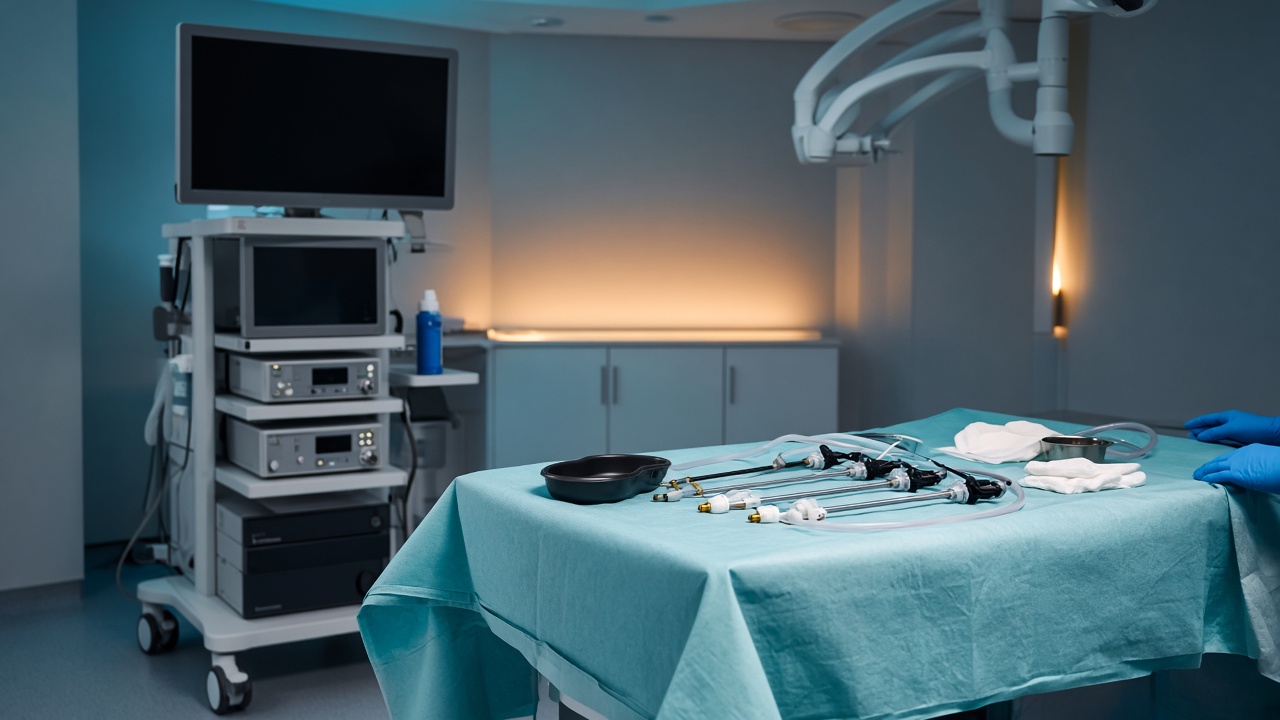
The procedure is done under general anaesthesia, so you feel nothing and remember nothing. Once you are asleep, the surgeon makes a small incision of about one centimetre inside or right next to the belly button and inserts a thin, lighted camera that clearly shows the abdominal organs. To work comfortably and separate the organs, the abdomen is gently inflated with carbon dioxide, a harmless gas. This creates space inside, and the reproductive organs can be seen clearly on the screen.
Then instruments are passed through very small openings of about half a centimetre near the groin. Different techniques can be used to close the tubes depending on the surgeon's preference and your situation. Sometimes part of the tube is sealed with electrical energy and cut; sometimes small titanium or plastic clips are placed on the tubes. In recent years, as discussed below, removing the tubes completely has become the most commonly preferred method. Whichever technique is used, the procedure usually takes about thirty to forty-five minutes. The instruments are removed, the gas is released, and the small openings are closed with hidden stitches and covered with small dressings. When you wake up, you will usually see only a few small plasters on your abdomen.
Can Tubal Ligation Be Done During Open Surgery or a C-Section?
Yes, and in terms of timing this is one of the most common practical approaches. If a woman is already having a caesarean section and does not want more children, this is a convenient opportunity, because the abdomen and uterus are already open. Right after the baby is delivered and the uterus is cleaned, the surgeon can quickly reach the tubes. A small segment from the middle of each tube is tied with special sutures and removed. This adds only a few minutes to the operation and usually does not add noticeable pain or problems during recovery.
Similarly, after a vaginal birth, tubal ligation can be done easily within the first hours or the first day. Right after birth the uterus has not yet shrunk and sits at the level of the belly button, so the tubes are high up, close to the abdominal wall. Through a tiny incision of two to three centimetres just below the belly button, the tubes can be reached, the procedure done and the area closed. The procedure is completed while the mother is already resting in hospital after birth, and she goes home with permanent contraception.
What Should You Pay Attention to When Preparing for Tubal Ligation?
Although tubal ligation is a short and comfortable operation, it is still surgery that requires general anaesthesia, so both physical and psychological preparation matter. First, the decision needs to be truly settled in your own mind. If you have even the slightest doubt, such as "maybe I'll want another child one day", it is best to postpone the procedure. Once you are sure you are psychologically ready, medical preparation begins.
The tests and assessments usually requested before surgery are:
- Blood group
- Complete blood count
- Clotting tests
- Liver enzymes
- Kidney function tests
- Blood pregnancy test
- Anaesthesia assessment
The blood pregnancy test is especially important. Sometimes a woman may have become pregnant very recently without knowing it. Performing this operation during an early pregnancy can lead to serious complications, so confirming a negative blood pregnancy test, even on the morning of surgery, is an essential rule. In addition, not eating or drinking anything from midnight before surgery, so that your stomach is completely empty, is necessary for safe anaesthesia.
What Is Recovery Like After Tubal Ligation?
After keyhole surgery, waking up and recovering is usually surprisingly quick. Once the anaesthetic wears off you are taken to your room. Feeling slightly drowsy for the first few hours and having mild, period-like pain in the abdomen is entirely normal, and simple painkillers usually control it quickly.
Interestingly, what patients complain about most after surgery is not abdominal pain but a stabbing pain in the right shoulder or neck. This pain has nothing to do with the surgical site. During the operation the abdomen is inflated with gas to give a clear view. Although most of the gas is released at the end, some inevitably remains. This gas rises and irritates the diaphragm, the muscle that separates the chest from the abdomen. Because the diaphragm's nerves extend to the shoulder area, the brain perceives this as shoulder pain. It is not dangerous. When you start walking slowly around the room a few hours after surgery, the body absorbs the gas quickly and the pain goes away on its own. When you feel well, you can usually go home the same evening or the next morning.
When Can You Return to Daily Life After Tubal Ligation?
Once home, there is no need to stay in bed or feel like a patient. On the contrary, moving around the house and doing light tasks speeds recovery and helps the body absorb the gas. You only need to avoid straining yourself in the first few days. If you have a desk job, you can usually return to work within two or three days. The small stitches are usually dissolvable, so they do not need to be removed. If waterproof dressings were used, you can usually have a warm shower the next day.
Still, the internal tissues need some time to heal fully. The main points to keep in mind during this period are:
- Not lifting heavy objects
- Avoiding exercises that strain the abdominal muscles, such as sit-ups
- Avoiding intercourse for two weeks
- Not swimming in the sea, because of infection risk
- Not taking baths in a tub
- Not driving for the first twenty-four hours
- Staying away from strenuous sports
Does Tubal Ligation Disrupt Your Periods or Hormones?
This brings us to the most widespread myth about this operation. Many women fear that after tubal ligation their periods will stop or become lighter, their hormones will be thrown off, or they will suddenly go into menopause. Knowing how the body actually works shows why these fears are unfounded.
The main centre controlling the menstrual cycle and female hormones (oestrogen and progesterone) is not the tubes but the ovaries. The ovaries produce these hormones and release them directly into the bloodstream. The lining of the uterus responds to these hormones, thickening each month and being shed as a period. In this story, the tubes are only transport channels. During tubal ligation, the ovaries are not touched and their blood supply is preserved; only the middle of the transport channel is closed. As a result, the ovaries keep producing hormones and the uterus keeps bleeding in the same way. Whatever your cycle was like before surgery, it is generally expected to continue in the same pattern afterwards.
Does Tubal Ligation Cause Early Menopause?
The timing of menopause depends on the egg reserve in the ovaries and on age. Because tubal ligation does not touch the ovaries and does not reduce their blood supply in any meaningful way, it is not expected to bring menopause forward. Current evidence also suggests that removing the tubes completely (salpingectomy) does not significantly affect ovarian reserve. Changes in the cycle that appear in later years are usually linked to age. If you notice unusual symptoms, it is best to have a gynaecological check-up.
This page is for general information only. A personal plan can only be made after an examination.
This page is general information. Your own plan is set after examination.