
Gynecology
Fibroid Treatment: Medication, Non-Surgical Options and When Surgery Is Needed
8 min read
How are uterine fibroids treated, and can medication shrink them? Monitoring, hormonal treatments, embolization, and hysteroscopic and laparoscopic fibroid surgery.
Fibroid treatment is tailored to each woman based on the size, number and location of the fibroids, the symptoms they cause, her age and her pregnancy plans. Fibroids that cause no symptoms usually only need monitoring. For symptoms such as heavy periods and pain, options include medication, non-surgical approaches like a hormonal IUD or embolization, or removing the fibroid or the uterus.
Key Points
- Many fibroids cause no symptoms and need no treatment.
- The goal of treatment isn't to eliminate the fibroid but to control symptoms and, when needed, protect fertility.
- Medications can reduce bleeding and some can shrink fibroids temporarily, but they don't remove them permanently.
- Fibroids that grow into the uterine cavity (submucosal) can usually be removed through the cervix with hysteroscopy, without any abdominal incision.
- For women who want children, myomectomy, which preserves the uterus, is preferred.
- Fibroids usually shrink after menopause.
What Are Fibroids?
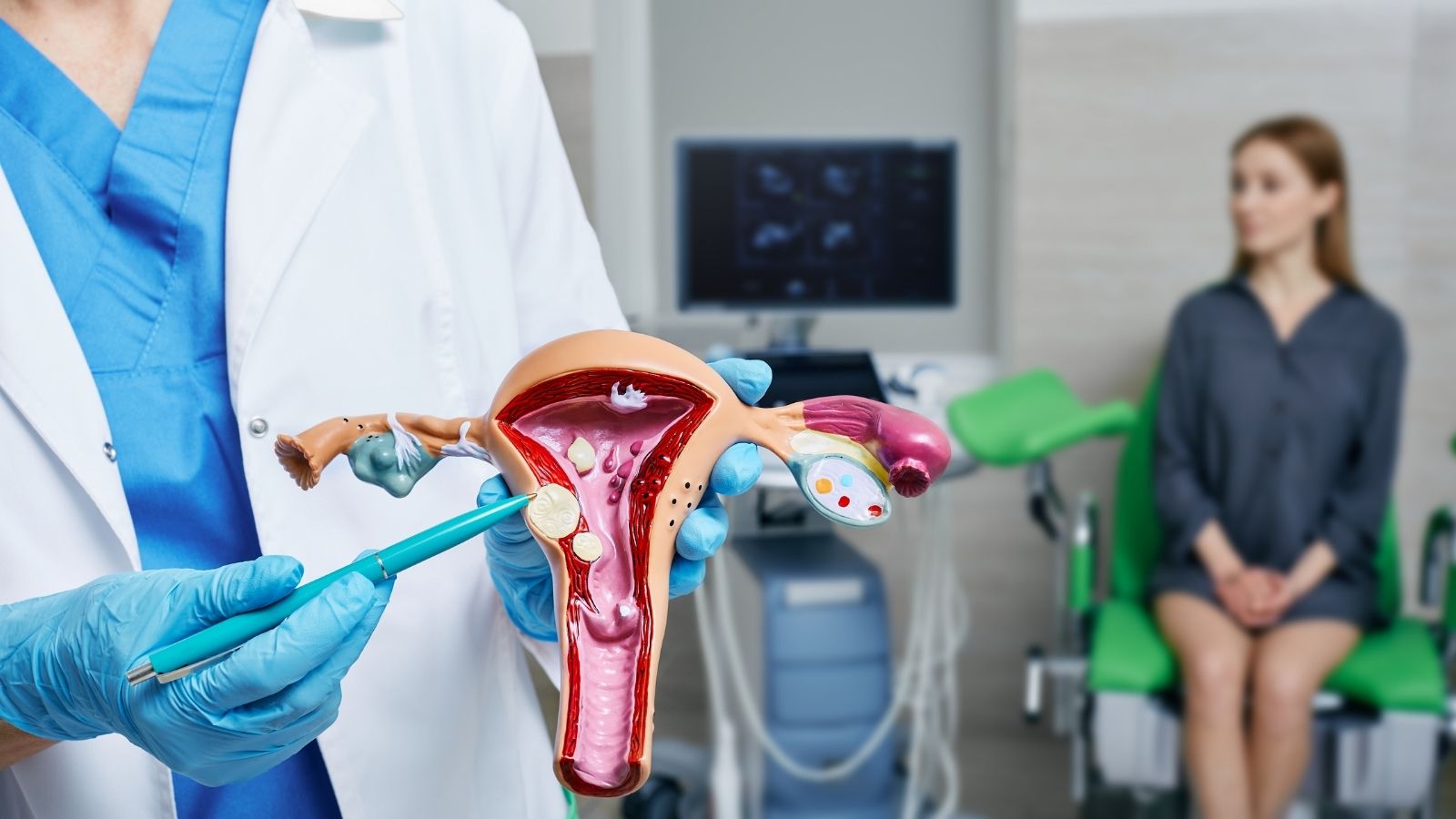
Fibroids (myomas) are benign tumors that grow from the muscle tissue of the uterus. They are very common in women of reproductive age. They can grow under the influence of estrogen and progesterone and usually shrink after menopause when hormone levels fall. For general information, see our article on fibroids, and for how they are classified by location, types of fibroids.
Factors That Shape the Treatment Decision
- Symptoms: Heavy periods, anemia, pelvic pain, pressure symptoms (frequent urination, constipation).
- Location: In the uterine cavity (submucosal), within the muscle wall (intramural) or on the outer surface (subserosal).
- Size and number: A single small fibroid, or many large ones?
- Pregnancy plans: Whether the uterus needs to be preserved.
- Age and how close you are to menopause: Monitoring may be preferred more often for women nearing menopause.
- Personal preference and overall health.
Monitoring (Watchful Waiting)
For fibroids that cause no symptoms and show no tendency to grow, regular ultrasound checks are usually enough. How often you're checked depends on the fibroid's size and your situation. Rapid growth, new symptoms or growth after menopause call for reevaluation.
Can Fibroids Be Treated With Medication?
Medications are effective for controlling the bleeding and pain fibroids cause, but they don't remove fibroids permanently. When the medication is stopped, symptoms and fibroid size can return. The main options are:
Medications that reduce bleeding and pain
- Non-hormonal pain relievers: Can reduce period pain and some bleeding.
- Medications that reduce bleeding (by supporting clotting): Taken only on period days, they can reduce blood loss.
- Iron supplements: To correct blood counts if anemia has developed.
Hormonal treatments
- Birth control pills and progestin-containing medications: Can regulate and lighten periods; their effect on shrinking fibroids is limited.
- Hormonal IUD: Can significantly reduce heavy menstrual bleeding with fibroids that don't distort the uterine cavity. It may not be suitable for fibroids that grow into the cavity.
- GnRH agonists and antagonists: Temporarily lower hormone levels to menopausal levels, which can shrink fibroids and stop bleeding. Because of side effects such as bone loss, they are usually used short term, for example to prepare for surgery, or together with add-back hormone therapy.
Which medication, what dose and for how long are decided only by your doctor after an exam.
Herbal remedies and "treating fibroids at home"
There is no reliable scientific evidence that herbal blends or special diets dissolve fibroids. For a woman with heavy bleeding, losing time on these methods can make anemia worse. Share any product you're considering with your doctor.
Non-Surgical (Minimally Invasive) Procedures
Uterine artery embolization (UAE)
An interventional radiologist inserts a thin catheter through an artery in the groin or wrist and blocks the vessels that feed the fibroid. Over time, the fibroid shrinks and symptoms may improve. It may be considered for women who aren't planning a pregnancy, don't want surgery or are at high surgical risk. For women planning a pregnancy, whether it's suitable should be discussed carefully.
Focused ultrasound and radiofrequency ablation
These methods aim to shrink fibroid tissue by targeting it with heat energy. They aren't suitable for every fibroid and aren't available at every center. Data on long-term results and effects on pregnancy are limited.
Surgical Treatment
Hysteroscopic myomectomy
Submucosal fibroids that grow into the uterine cavity can be removed with a thin camera passed through the cervix, without any abdominal incision. This is especially important for women with heavy bleeding or difficulty getting pregnant. For details, see our page on hysteroscopy.
Laparoscopic myomectomy
The fibroid is removed with a camera and instruments through small incisions in the abdomen, and the uterine wall is stitched closed. This approach is preferred for fibroids of suitable size and number. For general information, see our page on laparoscopic surgery.
Open (abdominal) myomectomy
Surgery through an abdominal incision for many or very large fibroids. The uterus is preserved.
For details on fibroid surgery, see our page on myomectomy. Information on factors that affect cost is available on our page about laparoscopic fibroid surgery costs.
Hysterectomy
This is removal of the uterus. It may be considered as a permanent solution for women who aren't planning a pregnancy, whose symptoms can't be controlled with other treatments or who have many large fibroids. Whether to keep the ovaries is discussed separately. Details are on our hysterectomy page.
Evaluation Before Treatment
Choosing the right treatment starts with mapping the fibroids. This involves:
- Transvaginal ultrasound: Determines the number, size and location of fibroids in the uterus.
- Saline infusion sonography or diagnostic hysteroscopy: Used to evaluate fibroids that extend into the uterine cavity in detail.
- MRI: Helpful for women with many fibroids, before embolization, or when fibroids need to be distinguished from adenomyosis.
- Blood count: Determines how severe any anemia is.
- Evaluation of the uterine lining: A biopsy may be needed, especially for women over 40 with irregular bleeding.
This information is considered together to find the best option for each woman.
Comparing Treatment Options
| Method | Uterus preserved? | Suitable if planning pregnancy | Recurrence |
|---|---|---|---|
| Monitoring | Yes | Yes | — |
| Medication | Yes | Pregnancy isn't planned while on medication | Symptoms may return when stopped |
| Hormonal IUD | Yes | After removal | Doesn't shrink fibroids |
| Embolization | Yes | Requires careful evaluation | Possible |
| Myomectomy | Yes | Yes | New fibroids may develop |
| Hysterectomy | No | No | Doesn't occur |
At What Size Is the Uterus Removed for Fibroids?
The decision to remove the uterus isn't based on fibroid size alone. Pregnancy plans, symptom severity, response to other treatments, the number of fibroids and the woman's preference are all considered together. Even with large fibroids, uterus-sparing surgery is the first choice for women who want children.
Fibroids and Menopause
Because hormone levels drop after menopause, fibroids usually shrink and symptoms ease. That's why monitoring may be preferred for women close to menopause with mild symptoms. A fibroid that grows after menopause, or new bleeding, needs a detailed evaluation.
When Should You See a Doctor?
- Your periods are very heavy, have clots or last more than 7 days
- You have signs of anemia such as fatigue, palpitations or shortness of breath
- You have pelvic pressure, frequent urination or constipation
- You're having trouble getting pregnant
- You've had bleeding after menopause
Frequently Asked Questions
Can fibroids be treated with medication?
Medications can control the bleeding and pain caused by fibroids, and some can shrink fibroids temporarily. But they don't remove fibroids permanently; symptoms can return when the medication is stopped.
Is there non-surgical treatment for fibroids?
Yes. Options include monitoring, medication, a hormonal IUD and uterine artery embolization. Which is suitable depends on the fibroids' features and your pregnancy plans.
Are birth control pills used to treat fibroids?
Birth control pills can regulate and lighten periods, but their effect on shrinking fibroids is limited. Your doctor will decide after an exam whether they're right for you.
Does a hormonal IUD help with fibroids?
It can significantly reduce heavy periods with fibroids that don't distort the uterine cavity. It may not be suitable for fibroids that grow into the cavity, and it doesn't shrink the fibroid itself.
How can fibroids be treated at home?
There is no proven way to dissolve fibroids at home. Regular exercise, a balanced diet and iron-rich foods support overall health, but fibroids that cause symptoms need a doctor's evaluation.
Does a 5 cm fibroid need surgery?
Size alone isn't decisive. A symptom-free 5 cm subserosal fibroid can be monitored, while a fibroid of the same size growing into the uterine cavity can cause heavy bleeding and difficulty getting pregnant. The decision depends on location and symptoms.
Can fibroids come back after surgery?
Myomectomy removes the existing fibroids, but new ones can develop in the uterus. That's why regular checkups are recommended after surgery.
This article is for general information only and does not replace diagnosis or treatment. A personal assessment requires an examination.
This page is general information. Your own plan is set after examination.