
Gynecology
Fibroids and Pregnancy: Can Fibroids Stop You Getting Pregnant?
9 min read
Can fibroids prevent pregnancy, and do they grow during pregnancy? How each fibroid type affects fertility, pain in pregnancy, mode of delivery and pregnancy after myomectomy.
Most women with fibroids can conceive naturally and go on to have a healthy pregnancy. How fibroids affect pregnancy depends on their type, size and location: submucosal fibroids, which grow into the uterine cavity, can make it harder to conceive and may increase the risk of miscarriage, whereas subserosal fibroids on the outer surface of the uterus usually have no effect. Fibroid pain during pregnancy and the choice of delivery method are also assessed according to these features.
Key Points
- Having fibroids does not, on its own, cause infertility.
- The type that affects pregnancy most is the submucosal fibroid, which distorts the uterine cavity.
- Fibroids may grow slightly in early pregnancy, but most do not grow significantly.
- The most common problem in pregnancy is pain caused by a reduced blood supply to the fibroid (red degeneration).
- After fibroid surgery, the recommended waiting time before conceiving and the mode of delivery depend on the type of operation.
- Women with fibroids who are planning a pregnancy are advised to have an assessment before trying to conceive.
Do Fibroids Prevent Pregnancy?
The effect of a fibroid on fertility depends largely on how much it affects the uterine cavity. For general information on fibroids and their types, see our articles on fibroids and types of fibroids.
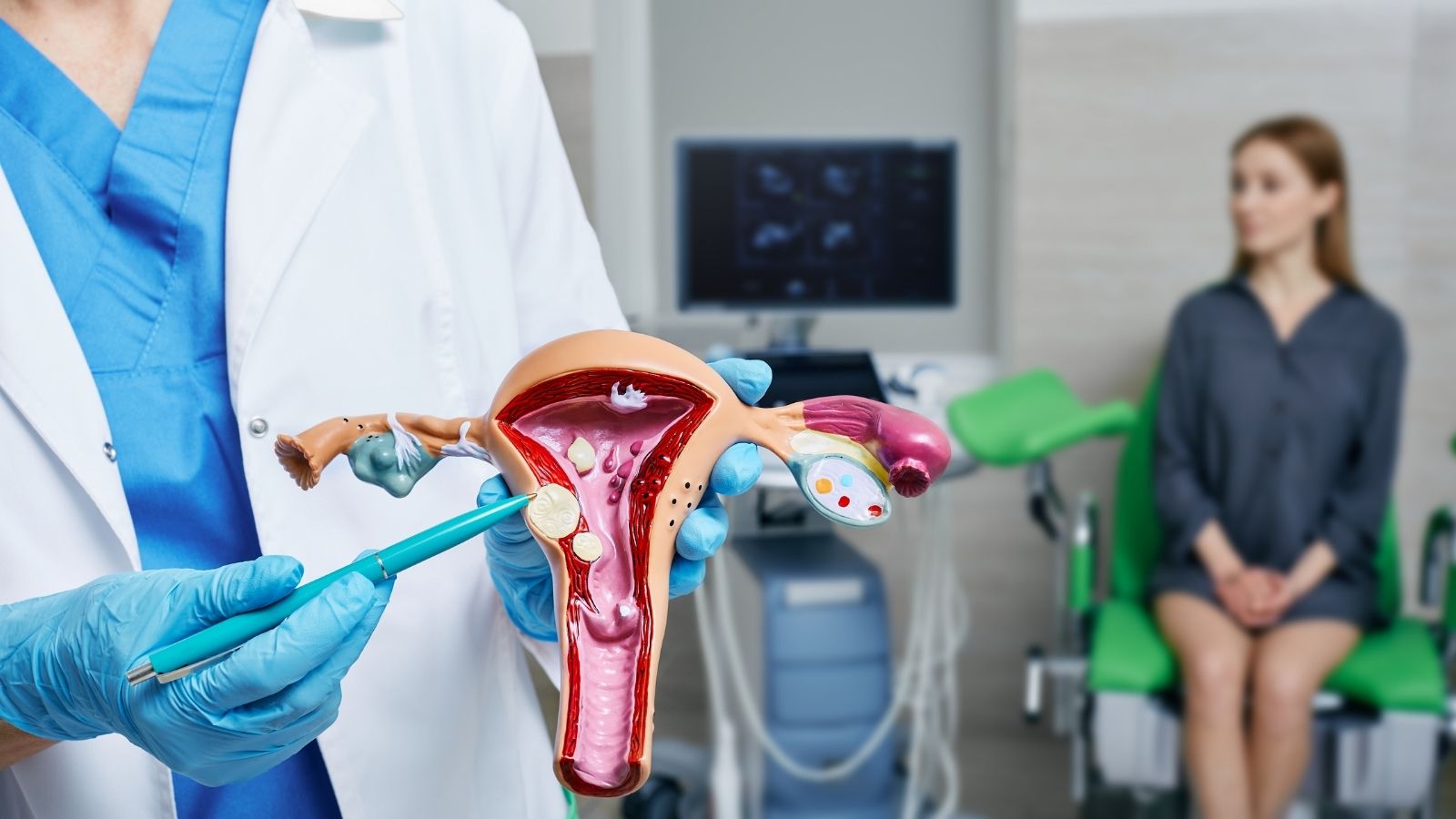
Submucosal fibroids
These fibroids grow into the uterine cavity. They can make it harder for an embryo to implant in the lining of the uterus and may increase the risk of early pregnancy loss. In women planning a pregnancy, removing them by hysteroscopy often improves the chance of conceiving.
Intramural fibroids
Intramural fibroids that distort the shape of the uterine cavity, or large ones, can have a negative effect on pregnancy. The effect of small intramural fibroids that do not affect the cavity is debated, and in most cases no treatment is needed. The decision is made by considering the size and number of fibroids together with the woman's age and how long she has been trying to conceive.
Subserosal fibroids
Because they sit on the outer surface of the uterus, they usually do not affect the ability to conceive. Exceptions are very large fibroids or those positioned where they could affect the fallopian tubes.
Can fibroids press on the fallopian tubes?
Fibroids located near the corner of the uterus can, rarely, press on the part of the tube that opens into the uterus and make it harder for sperm and egg to pass through.
Do Fibroids Grow During Pregnancy?
Because of rising hormone levels and increased blood flow to the uterus, fibroids may grow slightly during pregnancy, particularly in the first trimester. However, most fibroids do not grow significantly in pregnancy, and some even shrink. After birth, as hormone levels fall, fibroids usually return to around their pre-pregnancy size.
Possible Fibroid-Related Problems in Pregnancy
Pain (red degeneration)
This is the most common problem caused by fibroids in pregnancy. When a fast-growing fibroid outgrows its blood supply, tissue damage develops inside it, causing localized and sometimes severe pain. Mild fever and nausea may accompany it. It usually settles within a few days with rest and pain relief that is safe in pregnancy. Any pain during pregnancy should always be assessed by an obstetrician.
Bleeding and miscarriage
The risk of bleeding and miscarriage in early pregnancy may be higher, particularly with submucosal fibroids and fibroids that distort the uterine cavity.
Baby's position and mode of delivery
Large fibroids, or fibroids in the lower part of the uterus, can prevent the baby from turning head-down and may narrow the birth canal. In this case a cesarean section may be needed.
Preterm birth and placental problems
Some studies suggest that women with large or multiple fibroids may have a slightly higher risk of preterm birth, placental abruption and postpartum hemorrhage. Even so, the great majority of women with fibroids have an uncomplicated pregnancy.
The baby's growth
Fibroids are not expected to affect the baby's development directly. Very large fibroids can rarely cause problems by limiting the space inside the uterus.
Twin pregnancy and fibroids
In a twin pregnancy the uterus stretches more, so closer monitoring for fibroid-related pain and preterm birth may be needed.
Monitoring Fibroids in Pregnancy
During pregnancy care for women with fibroids:
- The number, size and position of the fibroids are recorded at the first ultrasound scan.
- The fibroids and the baby's growth are monitored at regular intervals.
- How close the fibroid is to the placenta and the cervix is assessed.
- The mode of delivery is planned according to the position of the fibroid and the baby.
Fibroid surgery is generally not performed during pregnancy; except in very rare, unavoidable situations, fibroids are reassessed after birth. Removing a fibroid during a cesarean section is also usually not recommended because of the risk of bleeding, although pedunculated fibroids that can be removed easily may be an exception.
Do Fibroids Need Treatment Before Pregnancy?
Not every woman with fibroids who is planning a pregnancy needs treatment. Treatment is usually considered in the following situations:
- Submucosal or intramural fibroids that distort the uterine cavity
- Fibroids together with recurrent pregnancy loss or unexplained infertility
- Fibroids causing heavy bleeding or significant pain
- Fibroids affecting the uterine cavity before IVF treatment
For treatment options see our page on fibroid treatment, and for the surgical procedure see myomectomy.
Fibroids and IVF
In women planning IVF, removing fibroids that distort the uterine cavity before embryo transfer is often recommended. For fibroids that do not affect the cavity, the decision to operate is made more cautiously, because unnecessary surgery can delay treatment.
Pregnancy After Fibroid Surgery
When can you try to conceive?
The waiting time depends on the type of operation:
- Hysteroscopic myomectomy: A short wait (a few menstrual cycles) to allow the lining of the uterus to heal is often enough.
- Laparoscopic or open myomectomy: A wait of several months is usually advised to allow the uterine wall to heal.
The exact interval is decided by the operating surgeon, based on the size of the fibroid, the depth of the incision in the uterine wall and the surgical technique used.
Mode of delivery
After a myomectomy that reached the deep layers of the uterine wall or opened the uterine cavity, a planned cesarean section is often recommended to reduce the risk of uterine rupture during labour. After removal of superficial subserosal fibroids or a hysteroscopic myomectomy, vaginal birth may be considered. For this decision, it is important to share the operation report with the doctor who is following the pregnancy.
Fibroids After Birth
In the weeks after birth, as the uterus returns to its previous size, fibroids usually shrink as well. In women with fibroids, the uterus may sometimes contract more slowly after delivery, so careful monitoring for postpartum bleeding may be needed. Fibroid surgery is generally not planned while breastfeeding; the current state of the fibroids is assessed with an ultrasound scan at the postnatal check, and a treatment decision is made at that stage if needed. If another pregnancy is planned, it is advisable to have the fibroids reassessed before conceiving.
When Should You Seek Care Straight Away During Pregnancy?
- Abdominal pain that keeps getting worse or does not go away
- Vaginal bleeding
- Regular, frequent contractions
- A temperature above 38 °C
- A marked reduction in the baby's movements (in later pregnancy)
Advice for Women Planning a Pregnancy
- The number, size and position of fibroids should be checked by ultrasound before pregnancy.
- If you have had fibroid surgery, keep your operation report and always share it with the doctor caring for you in pregnancy.
- Any anemia should be treated before pregnancy.
- Pre-pregnancy supplements such as folic acid should be started as advised by your doctor.
- If you have pain, bleeding or contractions during pregnancy, seek care without delay.
Frequently Asked Questions
Do fibroids prevent pregnancy?
In most cases, no. Most women with fibroids can conceive naturally. However, submucosal fibroids that distort the uterine cavity and some large intramural fibroids can make it harder to conceive.
Can you get pregnant with fibroids?
Yes, most fibroids do not stop you from getting pregnant. How the pregnancy progresses depends on the type and location of the fibroid, so regular monitoring throughout pregnancy is recommended.
Do fibroids grow during pregnancy?
Some fibroids may grow slightly, especially in the first trimester, but most do not grow significantly. After birth they usually return to around their pre-pregnancy size.
Do fibroids cause pain in pregnancy?
Yes. Pain caused by a reduced blood supply to the fibroid (red degeneration) is the most common fibroid problem in pregnancy. It usually settles with rest and suitable pain relief, but any pain should be assessed by a doctor.
Can fibroids cause preterm birth?
Women with large or multiple fibroids may have a slightly higher risk of preterm birth. However, the great majority of women with fibroids give birth at term.
How soon can you get pregnant after fibroid surgery?
A short wait is usually advised after hysteroscopic surgery, and generally several months after laparoscopic or open myomectomy. The exact interval is decided by the operating surgeon.
Can you have a vaginal birth after fibroid surgery?
After operations that reached the deep layers of the uterine wall, a planned cesarean section is usually recommended. After superficial or hysteroscopic operations, vaginal birth may be considered.
This article is for general information only and does not replace diagnosis or treatment. A personal assessment requires an examination.
This page is general information. Your own plan is set after examination.